
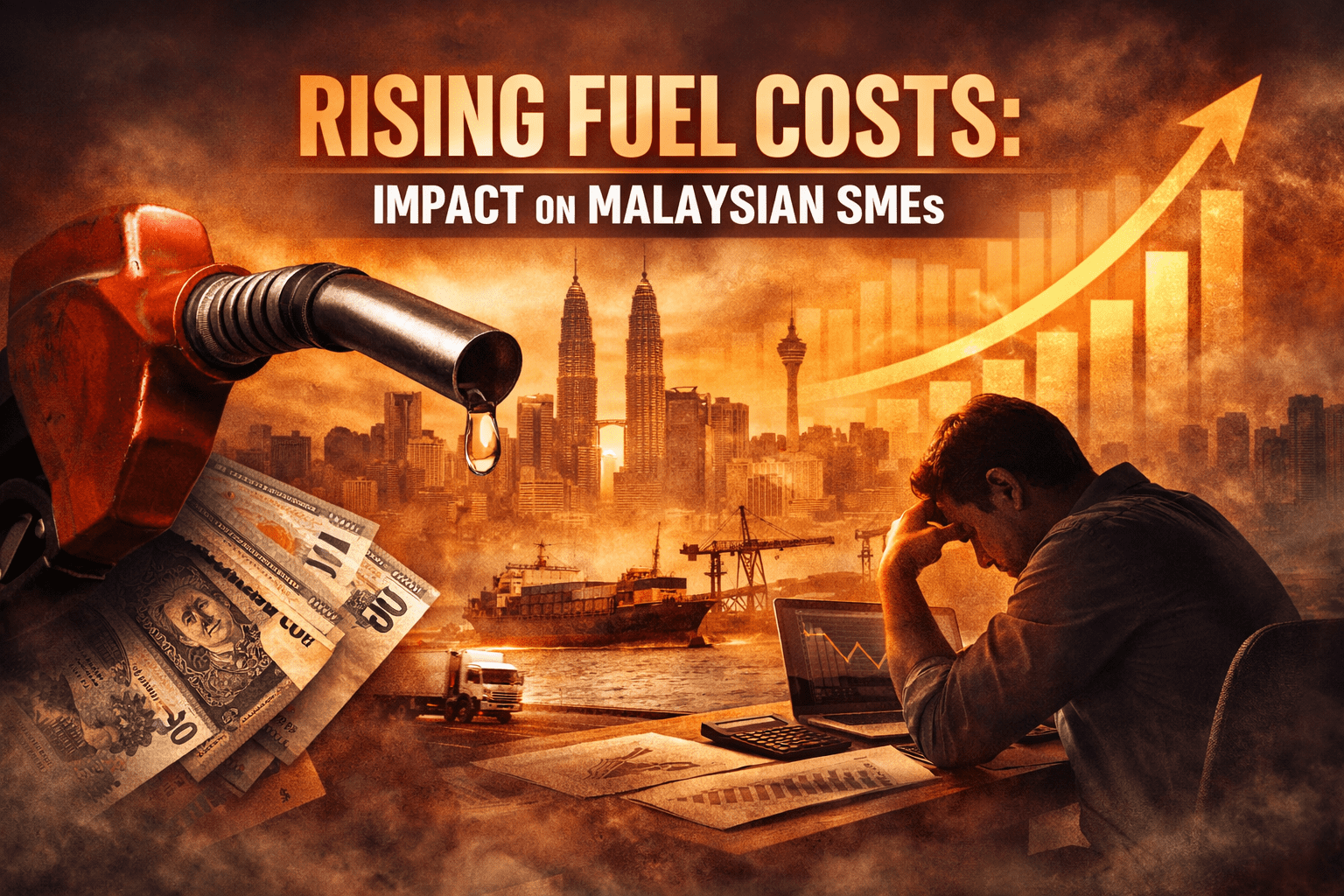
Fuel price increases and targeted subsidies may still impact SME operating costs. Learn how Malaysian businesses can manage rising expenses and protect profitability.
fuel-price-increase-malaysia-impact-on-smes
Global oil prices are rising once again. In response, the Malaysian government has announced that targeted fuel subsidies will be maintained to cushion the impact on consumers.
While this measure helps stabilise fuel prices for many Malaysians, businesses—particularly small and medium-sized enterprises (SMEs)—may still feel the ripple effects across their operations.
For SMEs operating in competitive markets with tight margins, even small increases in operating costs can quietly erode profitability.
The question is no longer just about fuel prices.
The real question is: how prepared is your business to absorb rising costs?
The Hidden Impact of Fuel Prices on SME Operations
Fuel prices do not only affect petrol stations or transportation companies.
They influence the entire supply chain.
When fuel costs increase, businesses often experience a chain reaction across multiple areas of their operations:
- Higher logistics and delivery costs
- Increased supplier pricing due to transportation expenses
- Rising distribution and fulfilment costs
- Increased operational expenses for businesses with mobile teams or service vehicles
Even companies that do not rely heavily on fuel directly may eventually see higher costs reflected in supplier invoices and service fees.
For many SMEs, these cost increases accumulate gradually until margins begin to shrink.
Why Many SMEs Feel the Pressure First
Large corporations typically have structured financial planning, cost forecasting, and dedicated teams to manage operational changes.
SMEs, however, often operate with limited financial visibility.
Many business owners are focused on sales, operations, and growth. Financial structures such as detailed cost analysis, margin tracking, and scenario planning are often secondary priorities.
As a result, when external factors—such as rising fuel costs—affect the economy, SMEs may struggle to quickly assess:
- How much their operating costs have actually increased
- Whether current pricing still maintains healthy margins
- Where inefficiencies or cost leaks exist within the business
- How these changes may affect cash flow over the coming months
Without this visibility, businesses may unknowingly absorb rising costs until profitability begins to decline.
The Real Risk: Margin Compression
One of the most common consequences of rising operational costs is margin compression.
This happens when expenses increase, but businesses are unable to raise their prices proportionally.
Many SMEs hesitate to adjust pricing due to market competition or concerns about customer retention.
Over time, this creates a situation where:
- Revenue remains stable
- Expenses gradually increase
- Profit margins become thinner and thinner
In some cases, businesses may even continue operating at reduced profitability without immediately realising the extent of the impact.
Why Financial Clarity Matters More in Uncertain Conditions
Economic shifts—whether driven by fuel prices, inflation, or global market conditions—are a normal part of doing business.
However, businesses that understand their financial structure are far better equipped to respond.
Financial clarity allows SMEs to answer critical questions such as:
- Which products or services generate the strongest margins?
- Where are operational costs increasing the fastest?
- How resilient is the company’s cash flow under changing conditions?
- What adjustments can be made to maintain long-term profitability?
When businesses have clear financial insights, they can make proactive decisions instead of reacting only after problems emerge.
Turning Uncertainty into Opportunity
Periods of economic change often separate businesses that operate on intuition from those that operate on structure.
While rising costs can create challenges, they can also become an opportunity to strengthen financial systems, refine operations, and improve strategic decision-making.
Businesses that take the time to understand their numbers are better positioned to adapt, optimise, and grow—even during uncertain market conditions.
Supporting SMEs with Financial Clarity
At AMRE Management Services, we work closely with SMEs to bring clarity to the financial side of their business.
By helping business owners understand their financial position, cost structures, and tax obligations, we enable them to make more confident and informed decisions.
Because when external conditions shift—as they inevitably do—businesses with strong financial foundations are always better prepared.
If your business is navigating rising operational costs or looking to strengthen its financial structure, the right guidance can make a significant difference.
Clarity leads to better decisions. And better decisions drive sustainable growth.