

How Global Supply Chain Disruptions Affect Malaysian SMEs — And How to Stay Resilient
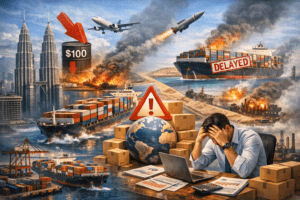
Global supply chains are becoming increasingly unpredictable. Conflicts in key regions, rising shipping costs, and disruptions to major trade routes are creating new challenges for businesses worldwide.
For Malaysian SMEs that rely on imported goods, components, or international suppliers, these disruptions can significantly affect operations, costs, and delivery timelines.
Understanding how global supply chain disruptions impact your business — and how to prepare for them — is essential for maintaining stability in uncertain markets.
Why Global Supply Chain Disruptions Matter for Malaysian SMEs
Malaysia is one of the most trade-dependent economies in Southeast Asia. With total trade exceeding RM3 trillion annually, the country plays an active role in global manufacturing and distribution networks.
Many Malaysian SMEs depend on international supply chains for:
- electronic components
- manufacturing materials
- machinery and industrial parts
- consumer goods imports
When disruptions occur in global trade routes or production hubs, Malaysian businesses can quickly feel the effects.
Common impacts include:
- delayed shipments
- rising import costs
- supply shortages
- unstable supplier pricing
These challenges can put pressure on operational planning and financial management.
Key Factors Driving Supply Chain Uncertainty
Several global developments are currently increasing supply chain risks.
1. Disruptions to Global Shipping Routes
Important maritime routes such as the Strait of Hormuz, the Suez Canal, and the Red Sea corridor are critical to global trade.
When geopolitical tensions or conflicts occur near these routes, shipping companies may reroute vessels to avoid risk. This often leads to longer transit times and higher transportation costs.
For Malaysian importers, this can mean:
- extended delivery timelines
- higher freight costs
- delayed production schedules
2. Rising Shipping and Logistics Costs
Shipping costs are highly sensitive to global instability.
When routes become longer or more complex, fuel consumption increases and logistics capacity tightens. As a result, container freight rates can rise rapidly.
For SMEs importing goods, higher logistics costs directly affect profit margins and pricing strategies.
3. Increased Cargo Insurance and Risk Premiums
When ships travel through regions experiencing geopolitical tensions, insurers often introduce war-risk premiums.
These additional insurance costs are passed along the supply chain and eventually impact importers and distributors.
This adds another layer of cost uncertainty for businesses managing international shipments.
4. Supplier Price Volatility
In times of uncertainty, suppliers may adjust their pricing more frequently due to fluctuating production costs, currency changes, or limited supply.
Instead of fixed pricing agreements lasting several months, businesses may experience much shorter quotation periods.
This makes budgeting and procurement planning more difficult for SMEs.
How Supply Chain Disruptions Affect SME Operations
For many small and medium-sized businesses, global disruptions can lead to operational risks such as:
Inventory challenges
Delayed shipments can cause stock shortages, which may interrupt sales or production.
Cash flow pressure
Businesses may need to hold more inventory or pay suppliers faster to secure goods.
Customer delivery delays
Late shipments can affect customer satisfaction and long-term relationships.
Pricing uncertainty
Rising import costs may require frequent price adjustments.
Without proper financial planning and operational visibility, these challenges can quickly become difficult to manage.
Strategies Malaysian SMEs Can Use to Reduce Supply Chain Risk
While global trade conditions cannot be controlled, businesses can take practical steps to reduce exposure to supply chain disruptions.
Diversify Suppliers
Relying on a single supplier or country increases vulnerability. Many businesses are now sourcing from multiple countries across Asia to reduce risk.
Build Strategic Inventory
Maintaining safety stock for critical materials can help prevent production interruptions during shipment delays.
Improve Financial Visibility
Accurate financial monitoring allows businesses to respond more quickly to cost changes and manage cash flow during uncertain periods.
Review Business Structure for Cross-Border Trade
As companies expand sourcing across different countries, international tax, compliance, and financial structures become increasingly important.
Proper business structuring helps ensure smooth operations across multiple jurisdictions.
How AMRE Supports SMEs Navigating Global Trade Uncertainty
In times of supply chain disruption, businesses need more than operational adjustments — they need strong financial and structural foundations.
At AMRE, we help SMEs build the financial clarity and cross-border structure required to operate confidently in international markets.
Our services support businesses with:
- international accounting and financial visibility
- cross-border business structuring
- regulatory and compliance support
- strategic financial guidance for international operations
By strengthening the underlying structure of your business, you can better adapt to global market changes while protecting operational stability.
Building Resilient Businesses in an Uncertain World
Global supply chains will continue to evolve as markets adapt to geopolitical, economic, and environmental changes.
For Malaysian SMEs engaged in international trade, resilience depends on preparation, financial clarity, and strong operational foundations.
Businesses that proactively strengthen their structure today will be better positioned to navigate uncertainty tomorrow.
If your business operates across borders or relies on international supply chains, AMRE can help you build the financial structure and compliance framework needed to move forward with confidence.