
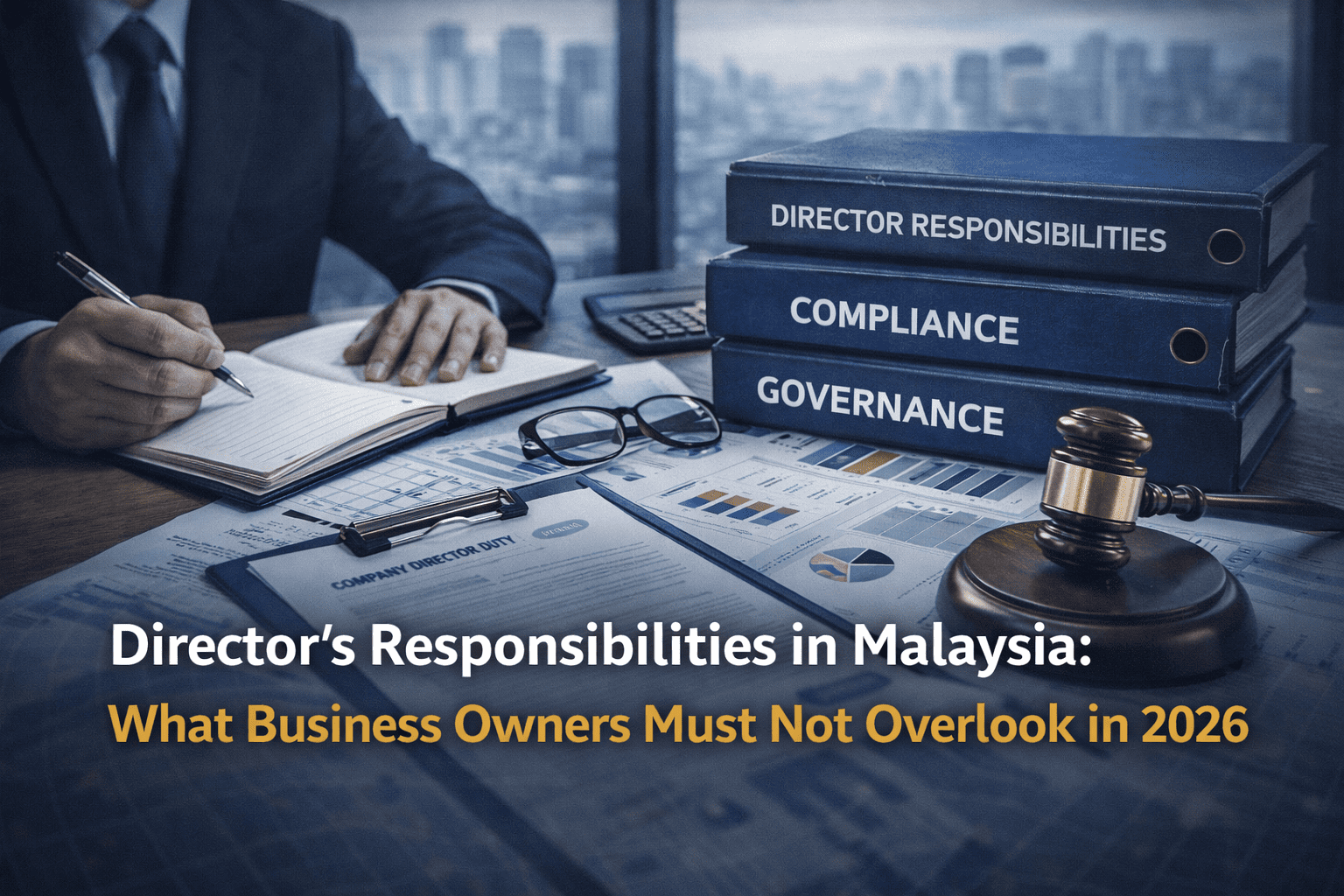
Becoming a company director in Malaysia brings more than authority and decision-making power.
It also carries legal responsibilities that can significantly impact the stability and credibility of a business
Many directors focus primarily on operations, growth, and revenue generation.
However, corporate governance, financial reporting, and regulatory compliance remain equally critical responsibilities.
Understanding these obligations helps directors protect both their company and their personal reputation.
The Legal Role of a Company Director
Under Malaysia’s Companies Act 2016, directors are responsible for ensuring that the company is managed properly and operates within the law.
Directors must act:
- In the best interest of the company
- With reasonable care, skill, and diligence
- In good faith when making business decisions
These duties extend beyond daily management and include oversight of financial and compliance matters.
Financial Record-Keeping Responsibilities
Every Malaysian company must maintain proper accounting records.
These records should accurately reflect:
- Financial transactions
- Company assets and liabilities
- Revenue and expenses
- Cashflow movements
Incomplete or disorganised financial records can create serious issues during audits, tax reviews, or financing processes.
Proper documentation protects both the company and its directors.
Tax Compliance and Reporting
Directors must ensure the company fulfils its tax obligations.
This includes:
- Corporate income tax filings
- Sales and Service Tax (SST) compliance
- Timely tax payments
- Accurate financial reporting
Failure to comply with tax regulations may result in penalties, investigations, or reputational damage.
Strong internal systems reduce the likelihood of compliance gaps.
Statutory Filings with SSM
Companies must also maintain statutory compliance with the Companies Commission of Malaysia (SSM).
Key responsibilities include:
- Filing annual returns
- Maintaining statutory registers
- Recording board resolutions
- Updating company information when changes occur
Failure to maintain these records can affect the legal standing of the company.
Governance and Decision Oversight
Directors must ensure that major business decisions are properly documented and supported.
This includes:
- Strategic investments
- Loans and financing arrangements
- Shareholder agreements
- Corporate restructuring
Transparent decision-making protects directors from potential disputes and strengthens corporate governance.
Why Governance Matters More in 2026
Regulatory oversight continues to evolve as Malaysia strengthens transparency and digital reporting systems.
Authorities increasingly rely on:
- digital financial records
- data verification
- cross-agency information sharing
This environment requires businesses to maintain stronger documentation and compliance frameworks.
Companies with structured governance practices operate with greater confidence and credibility.
How AMRE Supports Directors and Businesses
At AMRE Management Services, we assist directors in building structured compliance and governance systems that support long-term business stability.
Our services include:
- Corporate compliance support
- Financial reporting advisory
- Tax compliance management
- Business structuring and governance review
By strengthening internal processes, businesses can operate with clarity and reduced regulatory risk.
Final Thought
Being a director involves more than managing operations.
It requires ensuring that the company operates responsibly, transparently, and within regulatory expectations.
Strong governance, accurate financial records, and proper compliance practices form the foundation of sustainable business growth.
Directors who prioritise these areas place their companies in a stronger position for expansion, investment, and long-term success.