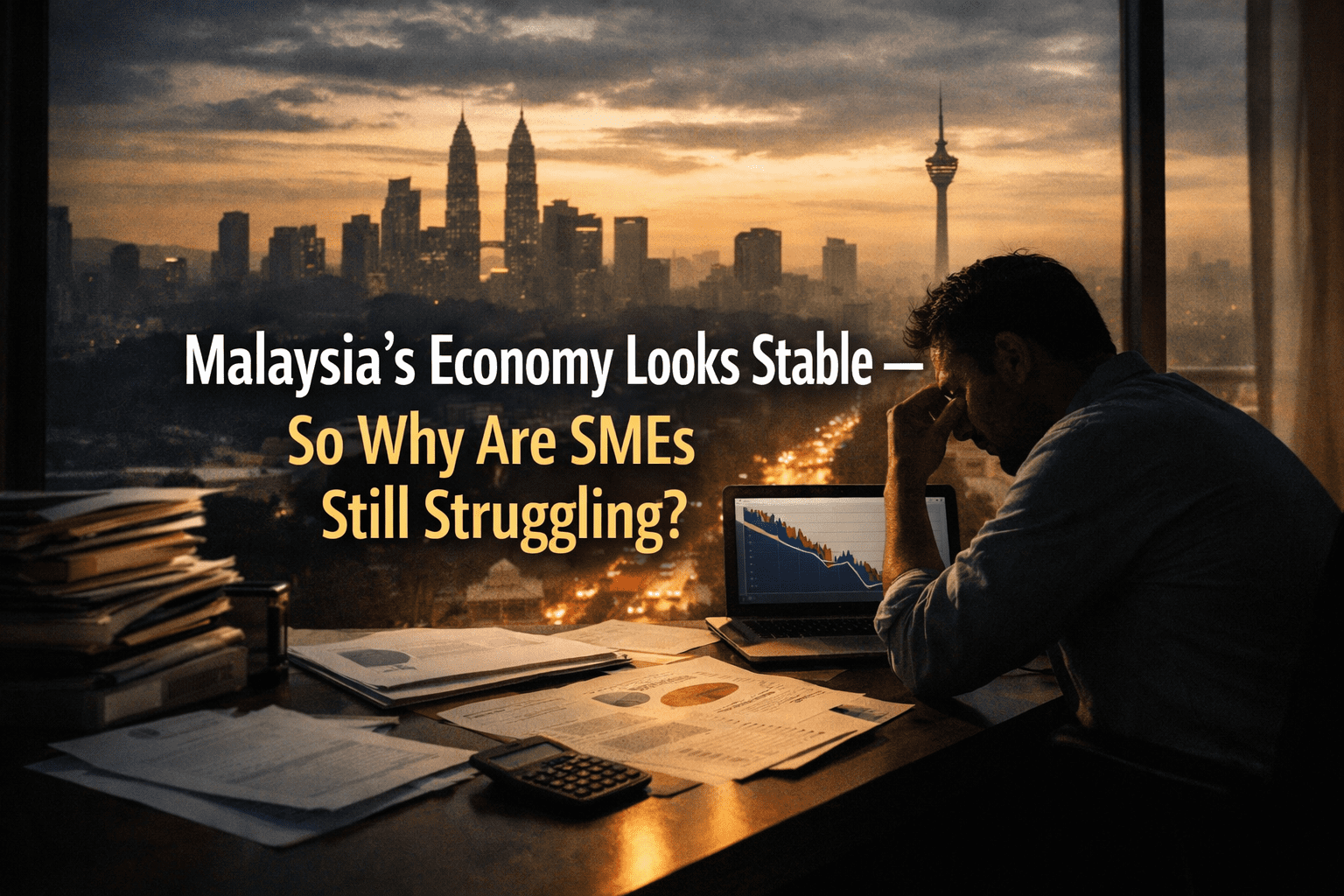
The Reality Many Business Owners Are Facing
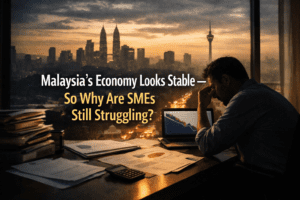
“Stable economy.”
That’s the message coming from official reports.
But for many SMEs on the ground, the situation feels very different:
- Sales are inconsistent
- Costs are rising
- Cash flow is tighter than expected
So what’s really happening?
The truth is simple:
National stability does not mean business stability.
What the Data Says — And What It Doesn’t
Recent economic signals from Malaysia indicate that the economy remains resilient, supported by domestic demand and ongoing activity.
But beneath that:
- Certain sectors are slowing
- Growth is uneven across industries
- Consumer behaviour is becoming more cautious
This creates a gap between headline confidence and business reality.
And SMEs are the ones feeling it first.
Why SMEs Are Still Under Pressure
Even in a “stable” economy, SMEs face structural challenges that don’t show up in national data:
1. Cash Flow Is Tightening
Revenue may still be coming in — but:
- Payments are slower
- Customers are more cautious
- Cash cycles are longer
2. Costs Are Quietly Increasing
Operational costs don’t jump overnight — they creep:
- Supplier price adjustments
- Wage pressures
- Compliance-related costs
Individually small. Collectively significant.
3. Demand Is Less Predictable
Customers are still spending — but not consistently:
- Delayed purchasing decisions
- Smaller order sizes
- More price sensitivity
The Hidden Risk: False Confidence
This is where many businesses make a critical mistake.
When the overall economy appears stable, it creates a sense of comfort:
- “Things are okay”
- “We’ll manage”
- “No need to change yet”
But stability can be misleading.
Because when pressure builds slowly,
problems are often detected too late.
What This Means for Your Business
If your business is experiencing:
- Stable revenue but declining cash balance
- High activity but low profitability
- Growth without financial clarity
Then the issue is not the economy.
It’s internal financial control and visibility.
What SMEs Should Be Doing Now
This is not the time to react.
It’s the time to tighten control.
Strengthen Cash Flow Visibility
Know exactly:
- When money is coming in
- When it is going out
- Where the gaps are
Not monthly — but continuously.
Review Cost Structure Regularly
Don’t wait for year-end surprises.
Identify:
- Unnecessary expenses
- Margin erosion points
- Cost patterns that are increasing over time
Move From Reactive to Planned Decisions
Many SMEs operate based on:
- “What happened last month”
- “What we think will happen next”
Instead, decisions should be based on:
- Real-time financial insight
- Structured forecasting
- Clear financial strategy
A Shift in Perspective
The businesses that navigate this period successfully are not the ones waiting for the economy to improve.
They are the ones that:
- Understand their numbers
- Control their risks
- Make decisions early
Because in a stable economy,
the difference between struggling and growing often comes down to internal clarity.
Final Insight
Economic stability is not a guarantee of business stability.
For SMEs, the real question is not:
“How is the economy performing?”
It is:
“How well do you understand and control your business within it?”